

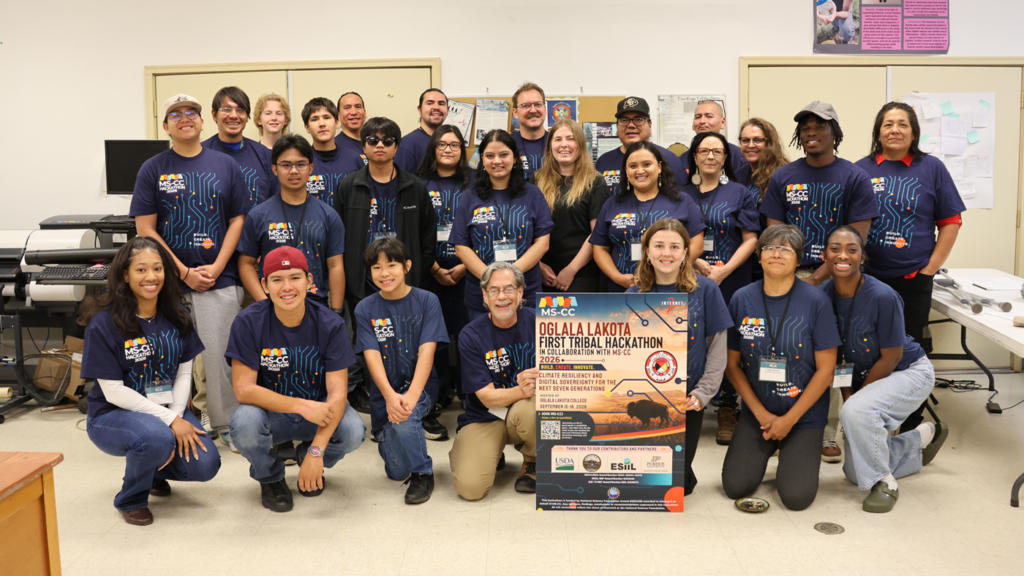
The MS-CC, alongside many other collaborators (USDA, Purdue University, ESIIL, and DAEAR) hosted our very first Tribal Hackathon at Oglala Lakota College! It was an absolute privilege and an experience that exceeded every expectation. From opening prayers to collaborative hands-on projects, the room was filled with an incredible sense of shared purpose as students, faculty, and community members came together to blend cutting-edge technology with Indigenous data sovereignty and climate resilience.
Throughout the two-day event, participants demonstrated unwavering dedication to acquiring relevant knowledge and collaborating effectively on their projects. They were highly engaged with the presentation materials provided by Daear Inc., followed by an invited lecture on Cubedynamics delivered by Dr. Ty Tuff from ESIIL. Subsequently, all participants engaged in a robust discussion on public data interests and concerns, which were closely connected to themes that significantly impact their local communities. Participants were divided into five distinct groups, each focusing on various themes, including but not limited to:
- Radionuclides
- Sweat Lodge Contamination
- Environmental and Social Impacts of Data Centers
Each group was then assigned the task of creating a GitHub page to document their research data lifecycle, including planning, data collection, and processing.
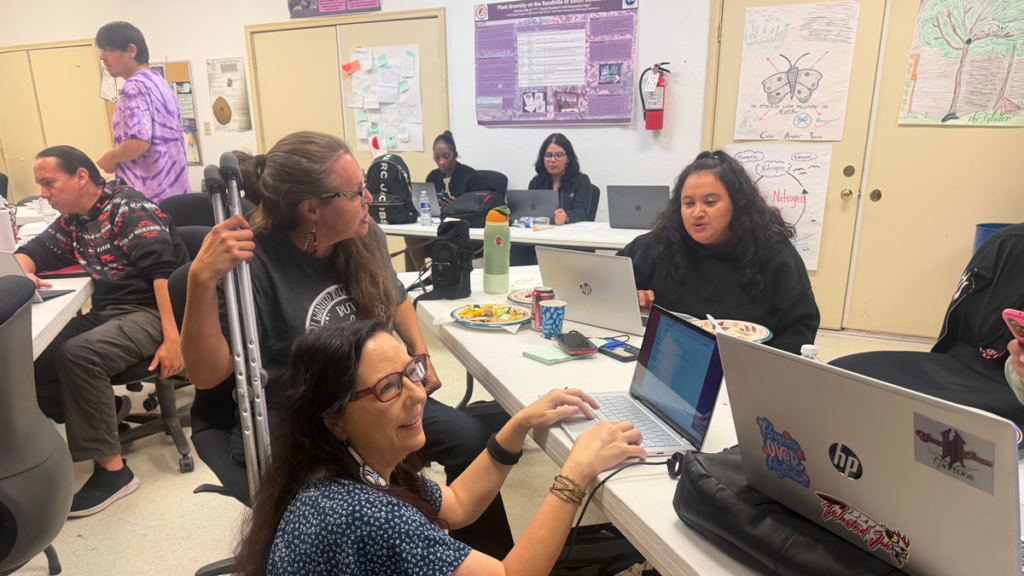
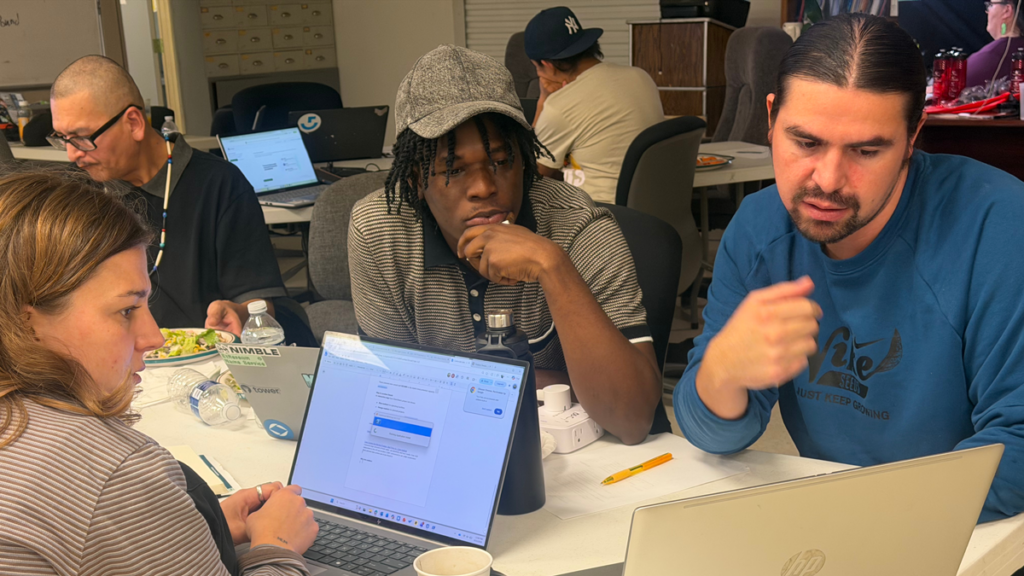
Working Side by Side
To keep workflows smooth and open, Tuff (ESIIL) set up dedicated GitHub repositories for each project. This gave every team a shared canvas to commit code, track progress, and build directly on each other’s work in real time. Over 2 days, the atmosphere was packed with energy and focus. Mentors and participants worked shoulder to shoulder, debugging scripts, analyzing datasets, and applying data science methodologies to transform raw ideas into actionable solutions.
Amplifying Tribal Colleges and Universities (TCUs) in tech is vital—it ensures that our communities are not merely passive consumers of innovation, but active architects of solutions tailored to our sovereign lands and traditions. Watching so many distinct cultures, backgrounds, and perspectives converge over a mutual passion for technology proved just how powerful community-driven innovation can be. We left Oglala Lakota College energized, deeply connected, and excited to build on this transformative foundation together.