


By Sidney Davis – Communications Manager, MS-CC
Editor’s Note: This Q&A continues our series of short interviews spotlighting members of the MS-CC community. Be on the lookout for additional interviews each month, and email Sidney Davis if there’s an MS-CC community member you would like us to spotlight in the future or if you would like to be in the spotlight yourself. We appreciate community members and all they do to advance our mission.
Kelley A. Redmon is an Adjunct Professor at Prairie View A&M University.
“After spending 18 years in the corporate world, I found that transitioning to higher education is one of the most rewarding chapters of my career. What I enjoy most is being in an environment where learning never stops. Every day offers new opportunities to gain knowledge, whether from students or the work itself.”
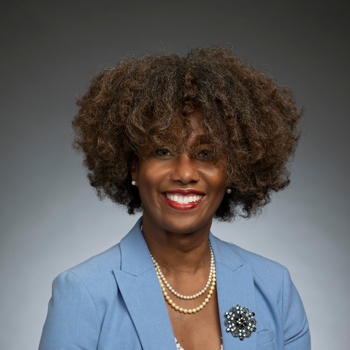
More About Kelley A. Redmon
- Personal Mantra: “Turning vision into reality.” – I believe ideas are just the beginning. True impact comes from transforming vision into action and creating meaningful outcomes that benefit others.
- Best Advice Ever Received (& from whom): The best advice I ever received came from my grandmothers: “Never let someone else tell your story because your voice was meant to be heard.” Their words taught me the importance of confidence, authenticity, and self-advocacy. Throughout my career, those conversations taught me to lead with purpose, embrace growth opportunities, and never underestimate the value of my perspective.
How does participation in the MS-CC help you in your current role?
As an adjunct professor and compliance officer, I view cybersecurity through a unique lens. My responsibility is not simply to protect systems; it is to protect the resources, opportunities, and public trust that make our work possible. In the College of Agriculture, Food, and Natural Resources (CAFNR) and Extension, federally funded programs support research, outreach, and services that directly impact communities. Participation in MS-CC has helped me strengthen the risk management tools and procedures that support the mission.
More importantly, it has expanded how I think. Through workshops, forums, and conversations with colleagues across the country, I have learned that cybersecurity is not merely a technical challenge; it is a responsibility tied to stewardship. Every discussion reinforces the importance of protecting the data, funding, and partnerships that institutions like ours depend upon to serve future generations.
Is there a particular resource that you find especially useful?
The most valuable resource is the collective itself. There is something powerful about being in a room with professionals who understand both the promise and the pressures facing institutions like ours that serve minority populations. The workshops and guest speakers provide valuable knowledge, but the real impact comes from the exchange of ideas.
One of my most meaningful experiences was traveling to Washington, D.C., through MS-CC and engaging with leaders who shape cybersecurity policy and practice. Those conversations challenged me to think beyond compliance and consider broader questions of resilience, access, and institutional sustainability. That experience ultimately sparked my interest in compiling information to write a white paper, thus becoming more engaged in the national dialogue surrounding cybersecurity and higher education.
How did you/your institution first become involved with the MS-CC?
My involvement began in 2024 when Prairie View A&M University hosted Cybersecurity Week under Tony Moore’s leadership. I have always been naturally curious, and the sessions immediately captured my attention. What began as an interest quickly became a commitment.
The discussions revealed how deeply cybersecurity is connected to every aspect of higher education, from protecting student information to ensuring the continuity of research and federally supported programs. I recognized that this was a field where thoughtful leadership could make a meaningful difference, and I wanted to be part of that conversation.
What would you say to encourage other institutions to participate in the MS-CC?
I encourage institutions to participate because the challenges we face are too important to navigate in isolation. For institutions that have historically accomplished much with limited resources, protecting federal funding, sensitive information, and institutional credibility has never been more critical.
MS-CC provides a space where institutions can speak candidly about challenges, share lessons learned, and develop solutions together. It creates opportunities to learn from peers who understand the realities of balancing innovation, compliance, and mission. The value is not only in what you learn, but in who you learn alongside.
Why does participation in the MS-CC continue to be important for you/your institution?
Participation remains important because the stakes for non-PWIs continue to rise. Cybersecurity threats evolve, regulatory expectations increase, and the consequences of a breach extend far beyond technology. They can impact research, funding, student trust, and institutional reputation.
For me, MS-CC serves as both a learning community and a source of inspiration. It challenges me to think strategically, encourages collaboration, and reminds me that safeguarding institutional resources is ultimately about protecting opportunity. Every interaction leaves me with new ideas, new perspectives, and a renewed sense of purpose. That is why the work matters, and why participation continues to be so valuable.